Get 100% marks with IREB-CPRE-FL Exam Questions and free pdf
killexams.com is proud to help candidates pass the IREB-CPRE-FL exam with its valid, updated and verified IREB-CPRE-FL exam cram. We serve as a guide in your journey to prepare and breeze through the IREB-CPRE-FL test. Your knowledge will be significantly enhanced by going through our IREB-CPRE-FL [KW8]. You will be fully prepared for a real IREB-CPRE-FL test. Thats all we do.
Latest MCQs 2026 Updated IREB Certified Professional for Requirements Engineering - Foundation Level (CPRE-FL) test Questions
IREB CPRE FL MCQs and Practice Test
MCQs and practice test with official IREB-CPRE-FL test Questions - Updated on Daily Basis 100% Pass Rate
These IREB-CPRE-FLLatest Topics are excellent At killexams.com, we deliver top-tier IREB-CPRE-FLPDF Download practice questions with authentic test questions, tailored to the latest objectives of the iSQIIREB-CPRE-FL exam. Master your preparation with our IREB-CPRE-FLexam results materials to enhance your knowledge and secure high marks. We stand behind your success with a money-back guarantee if you do not pass the genuine IREB-CPRE-FL exam. Our resources are more than just IREB-CPRE-FLexam results—they feature real IREB-CPRE-FL questions to ensure you are fully prepared for certification triumph.
The internet is filled with numerous prep questions providers, but many offer outdated and invalid IREB-CPRE-FLexam questions. Finding a reliable and up-to-date IREB-CPRE-FLprevious questions provider requires thorough research. To save you time and effort, trust killexams.com instead of wasting hundreds of dollars on unreliable content. We recommend visiting killexams.com to download 100% free IREB-CPRE-FLexam questions test questions and experience the quality firsthand. Register today and gain a 3-month account access to download the latest and most accurate IREB-CPRE-FLprevious questions, featuring actual IREB-CPRE-FL test questions and answers. Additionally, enhance your preparation with the IREB-CPRE-FL VCE test engine for an effective practice test experience.
Key Features of Killexams IREB-CPRE-FLexam questions
✅ Instant IREB-CPRE-FLexam questions download Access
✅ Comprehensive IREB-CPRE-FL Questions and Answers
✅ 98% Success Rate on IREB-CPRE-FL Exam
✅ Guaranteed actual IREB-CPRE-FL test Questions
✅ Regularly Updated IREB-CPRE-FL Questions
✅ Valid and 2026 Updated IREB-CPRE-FL Practice Test
✅ 100% Portable IREB-CPRE-FL test Files
✅ Full-Featured IREB-CPRE-FL VCE test Simulator
✅ Unlimited IREB-CPRE-FL test download Access
✅ Exclusive Discount Coupons
✅ Secure download Account
✅ 100% Confidentiality Assurance
✅ 100% Success Guarantee
✅ Free Practice test trial Questions
✅ No Hidden Fees
✅ No Monthly Subscriptions
✅ No Automatic Account Renewal
✅ Email Notifications for IREB-CPRE-FL test Updates
✅ Free Technical Support
Explore test Details Here: https://killexams.com/pass4sure/exam-detail/IREB-CPRE-FL
Compare Pricing Here: https://killexams.com/exam-price-comparison/IREB-CPRE-FL
View Full test List Here: https://killexams.com/vendors-exam-list
Exclusive Discounts on Full IREB-CPRE-FLexam questionsPractice test
- WC2020: 60% Flat Discount on Every Exam
- PROF17: Extra 10% Discount on Orders Over $69
- DEAL17: Extra 15% Discount on Orders Over $99
IREB-CPRE-FL test Format | IREB-CPRE-FL Course Contents | IREB-CPRE-FL Course Outline | IREB-CPRE-FL test Syllabus | IREB-CPRE-FL test Objectives
The Certified Professional for Requirements Engineering Foundation Level (CPRE-FL) is a personal certificate aimed at individuals working in Requirements Engineering- Business Analysis and Testing. It will expand your professional knowledge and help you to become more successful in your job.
The certification scheme is developed by the IREB- the contents are taught by independent training providers and the CPRE test can be taken at approved certification bodies. The CPRE-FL certificate has lifetime validity.
Requirements engineering as the first step of system development crucially influences the success of the development project. The four core disciplines of requirements engineering are: elicitation- documentation- verification and validation management. Professionalism in requirements engineering avoid defects in system analysis and establishes a structured proceeding from project idea to a valuable set of requirements. Quality characteristics are defined for a single requirement as well as for the requirements specification as a whole.
You can prepare for the exams by attending a training course with a recognised IREB® training provider for IREB® Requirements Engineering - Foundation Level; participants will have relevant content and subjects clearly explained and taught to them. The syllabus covers the important foundations in requirements engineering: differentiation between the system and system context- establishment and documentation of requirements- as well as their testing and management and the tool support available.The test is available on Pearson Vue for anyone wishing to self-study.
The IREB® Certified Professional for Requirements Engineering - Foundation Level certification is a prerequisite for taking the three IREB® Advanced Level courses: Requirements Modelling- Requirements Management- Requirements Elicitation & Consolidation.
The level of detail of this syllabus allows internationally consistent teaching and examination. To reach this goal- the syllabus contains the following
General educational objectives
Contents with a description of the educational objectives and References to further literature (where necessary)
All terms defined in the glossary have to be known (L1)- even if they are not explicitly mentioned in the educational objectives.
This syllabus uses the abbreviation "RE" for Requirements Engineering.
Structure of the Syllabus
The syllabus consists of 9 main chapters. One chapter covers one educational unit (EU). Each main chapter title contains the cognitive level of the chapter- which is the highest level of the sub-chapters. Furthermore- the teaching time is suggested that is the minimum a course should invest for that chapter. Important terms in the chapter- which are defined in the glossary- are listed at the beginning of the chapter.
EO 1.1 Knowing symptoms of and reasons for inadequate RE
EO 1.2 Knowing the four major activities of RE
EO 1.3 Knowing the role of communication in RE
EO 1.4 Knowing skills of a requirements engineer
EO 1.5 Knowing the three kinds of requirements
EO 1.6 Knowing the role of quality requirements
Good RE is important since many errors arise already in this phase and can only be rectified
later at high cost. Typical symptoms of inadequate RE are missing and unclear requirements.
Typical reasons for inadequate RE are the wrong assumption of the stakeholders that much is self-evident and does not need to
be stated explicitly communication problems due to differences in experience and knowledge
the project pressure from the client to build a productive system rapidly.
The four main activities of RE are elicitation- documentation- validation/negotiation plus the
management of requirements. The activities can be scheduled in specific processes such as
recommended in the Standard ISO/IEC/IEEE 29148:2011. They often concern different levels of
requirements such as stakeholder requirements and system or software requirements.
Natural language is the most important means to communicate requirements. At the same time
it is particularly important to agree on a common terminology. Furthermore the communication
medium (written or spoken) plays a big role. When communicating- all participants must deal
consciously with focusing and simplification.
This is especially true for the most important role in RE: the requirements engineer. Besides
communication skills he or she must especially have the following skills: analytical thinking-
empathy- conflict resolution skills- moderation skills- self-confidence and the ability to convince.
Typically we differentiate between three kinds of requirements: functional requirements-
quality requirements and constraints.
The umbrella term “non-functional requirement” is often used for quality requirements and
constraints. Quality requirements must be documented explicitly. In particular the following
aspects need to be considered
Performance
Security
Reliability
Usability
Maintainability
Portability
More comprehensive quality models can be found in the requirements engineering literature
and in standards such as the Standard ISO/IEC25010:2011.
Even though quality requirements are mostly documented using natural language- their relation
to other statements have to be traceable and their validation has to be ensured by quantitative
assertions or made operational by transformation into additional functionality.
Terms: System Context- System Boundary- Context Boundary
Educational Objectives:
EO 2.1 Knowing system context- system boundary and context boundary
EO 2.2 Mastering and using system boundary and context boundary
EU 2.1 System- System Context and Boundaries (L1)
The source and so the justifications of the requirements for a system lie in the system context of
the planned system. The source consists of the set of all context aspects that initiated or
influenced the definition of the requirements. Among the potential aspects in the system context
are:
People (stakeholder or groups of stakeholders)
Systems in operation (technical systems- software and hardware)
Processes (technical or physical processes- business processes)
Events (technical or physical)
Documents (e.g. laws- standards- system documentation)
It is the function of the system boundary to define which aspects will be covered by the planned
system and which aspects are part of this systems environment. The context boundary
identifies the part of the environment that has a connection to the system to be developed.
EU 2.2 Determining System and Context Boundaries (L2)
Often the system boundary is only precisely defined towards the end of the requirements
process. Before that- the desired functions and qualities of the planned system are only
incompletely known or not known at all. Therefore there will be a grey zone in which the
possible system boundary lies. Besides a shifting of the system boundary within the grey zone-
the grey zone itself can also shift during the RE process- e.g. when- through a shifting of the
system boundary- further aspects of the environment become important.
Also the context boundary can change over time- e.g. when it turns out- contrary to expectations-
that a legal requirement- previously classified as relevant- has absolutely no impact on the
planned system- then the system context is reduced in this area.
The context boundary also has a grey zone. It comprises the identified aspects of the
environment for which- at a particular time- it is unclear whether these aspects have a relation to
the planned system or not.
Educational Objectives:
- Knowing various types of requirements sources
- Knowing the significance of requirements sources and the consequences of disregarded requirements sources
- Knowing the most important information of the stakeholder documentation
- Knowing important principles in dealing with stakeholders (stakeholder rights and duties)
- Mastering and using the content and significance of the Kano model
- Knowing influencing factors for the choice of elicitation techniques
- Knowing advantages and disadvantages of elicitation techniques
- Mastering and using the following types of elicitation techniques and examples for each: survey techniques- creativity techniques- document-centered techniques- observation techniques and supporting techniques
An important activity in RE activity is the elicitation of requirements for the system to be
developed. The foundations for the requirements elicitation comprise on the one hand the
system context and on the other hand the requirements sources. Various types of requirements
sources are differentiated. Possible requirements sources are- for example- stakeholders-
documents or existing systems.
It is the task of RE to collect the goals and requirements from the various requirements sources.
If sources are disregarded- this can have significant negative consequences on the entire course
of the project. The documentation of the requirements sources should- with respect to the
stakeholders- contain at least the following information:
name
function (role)
additional personal and contact data
temporal and spatial availability during the project progress
relevance of the stakeholder
their area and extent of expertise
their goals and interests regarding the project
Depending on the company culture it is appropriate- in agreement with the stakeholders- to
define verbally or by means of written documentation the tasks- responsibilities- authority- etc.
From the stakeholder agreements arise rights and duties for each stakeholder. Dealing with
stakeholders effectively guards against lack of motivation and conflicts. Stakeholders should be
involved in the project and not only affected by the project.
EU 3.2 Requirements Categorization according to the Kano Model (L2)
For the elicitation of requirements- it is crucial to know what importance the requirements have
for the satisfaction of the stakeholders. According to the model of Dr. Kano- this satisfaction can
be classified into three categories:
Basic factors (synonym: Dissatisfiers)
Performance factors (synonym: Satisfiers)
Excitement factors (synonym: Delighters)
EU 3.3 Elicitation Techniques (L2)
Elicitation techniques fulfill the purpose of finding out the conscious- unconscious and
subconscious requirements of stakeholders. Important factors influencing the choice of
elicitation technique are risk factors- human influences- organizational influences- functioncontent influences and the intended level of detail of the requirements. Various techniques are
- Knowing key reasons for requirements documentation
- Knowing the three perspectives of functional requirements
- Knowing advantages and disadvantages of natural language requirements documentation
- Knowing the most important model-based requirements documentation form
- Knowing the advantages of mixed form of requirements documentation
- Knowing the advantages of standardized document structures
- Knowing widespread document structures
- Knowing important points for a tailored standard structure
- Knowing activities building on requirements documents
- Mastering and using quality criteria for requirements documents
- Mastering and using quality criteria for requirements
- Knowing the two most important style rules for requirements
- Mastering and using contents and importance of a glossary
- Mastering and using rules for handling the glossary
- Document Design (L1)
In RE it is necessary to document all important information. All forms of more or less formal
representation of requirements- from the description in prose up to diagrams with formal
semantics- are called documentation techniques. Many people are involved in the documentation
in the lifecycle of a requirements document. Documentation plays a goal-orientated supporting
function in communication. The following factors make this support necessary. Requirements
are long-lasting- legally relevant and should be accessible to all. Requirements documents are
complex.
EU 4.2 Documentation Types (L1)
Requirements documents include- amongst other things- functional requirements that normally
represent the following three different perspectives of a system.
Data perspective
Behavioral perspective
Functional perspective
All three perspectives can be documented by means of natural language requirements- whilst
conceptual model types are specialized for one of these perspectives. Effectively applicable
forms of the documentation are:
Natural language requirements documentation
Conceptual requirements models such as- for example use case diagrams- class diagrams-
activity diagrams or state diagrams (see also EU 6)
Combined forms of requirements documentation
EU 4.3 Document Structures (L1)
Central components of a requirements document are the requirements for the system being
considered. Besides the requirements- depending on the purpose of the document- the
requirements documents also contain information about the system context- acceptance
conditions or- for instance- characteristics of the technical implementation. In order to ensure
the manageability of requirements documents- such documents must be structured most
appropriately.
Reference structures for requirements documents propose a more or less complete and a more
or less flexible field-tested content structure. Common reference structures for requirements
documents are described amongst others in the Standard ISO/IEC/IEEE 29148:2011.
In practice it turns out that there are a lot of positive effects from using reference structures for
requirements documents. For instance- the use of reference structures simplifies the usage of the
requirements documents in subsequent development activities (e.g. in the definition of test
cases). Generally reference structures cannot be adopted one-to-one for a requirements
document- as the content structure frequently has to be adapted in detail for domain-- companyor project-specific circumstances.
EU 4.4 Use of Requirements Documents (L1)
Requirements documents serve as the basis for many activities during the project lifespan- such
as- for example
Planning
Architectural design
Implementation
Test
Change management
System usage and system maintenance
Contract management
In order to serve as a basis the subsequent development processes- the requirements document
must meet certain quality criteria. In particular this includes:
Unambiguity and consistency
Clear structure
Modifiability and extensibility
Completeness
Traceability
EU 4.6 Quality Criteria for Requirements (L2)
In addition- the individual requirement must satisfy certain quality criteria- in particular:
agreed
unambiguous
necessary
consistent
verifiable
feasible
traceable
complete
understandable
Besides the quality criteria for requirements there are two basic style rules for requirements in
natural language- which promote readability:
short sentences and paragraphs
formulate only one requirement per sentence
A frequent cause of conflicts- arising in RE- lies in the different understanding of terminology
among the involved people. To prevent this problem- it is necessary that all relevant terms are
defined in a glossary. A glossary is a collection of term definitions for:
context-specific technical terms
abbreviations and acronyms
everyday concepts that have a special meaning in the given context
synonyms
homonyms
The following rules should be observed when working with a glossary:
The glossary must be managed centrally
The responsibilities for maintaining the glossary must be defined
The glossary must be maintained over the course of the project
The glossary must be commonly accessible
Use of the glossary must be obligatory
The glossary should contain the sources of the terms
The stakeholders should agree upon the glossary
The entries in the glossary should have a consistent structure
It is beneficial to begin the development of the glossary as early as possible- in order to reduce
the alignment work later on
Terms: Requirements Template
Educational Objectives:
EO 5.1 Mastering and using the five transformational processes in the perception and writing
of natural language and their consequences on the formulation of requirements
EO 5.2 Mastering and using the five steps for formulating requirements using a requirements
template
EU 5.1 Language Effects (L2)
As natural language is often ambiguous and interpretable- it is necessary to pay special attention
to precisely this aspect when using language. During the processes of perception and writing- socalled “transformational processes” occur. The fact that these transformational processes follow
certain rules can be used by the requirements engineer to elicit exactly what the author of the
requirement really did mean. The five most relevant transformational processes for RE are:
Nominalization
Nouns without reference index
Universal quantifiers
Incompletely specified conditions
Incompletely specified process words
EU 5.2 Requirements Construction using Templates (L2)
Requirements templates are an easily learnable and applicable approach to reducing language
effects in the formulation of requirements. The requirements template effectively supports the
author of a requirement in creating high quality requirements.
The five steps to formulating requirements through a requirements template are:
Determine legal obligation
Determine the core of the requirement
Characterizes the activity of the system
Insert objects
Determine logical and temporal conditions
Educational Objectives
- Knowing the purpose and definition of attribute schemes
- Knowing important attribute types for requirements
- Mastering and using views on requirements
- Knowing methods for prioritizing requirements
- Mastering and using techniques for prioritizing requirements
- Knowing the benefits of requirements traceability
- Mastering and using classes of traceability relationships
- Mastering and using forms of representation for traceability relationships
- Mastering and using versioning of requirements
- Mastering and using the formation of requirements configurations
- Mastering and using the formation requirements baselines
- Knowing the importance of requirements changes
- Knowing the functions and members of a Change Control Board
- Mastering and using the elements of a requirements change request
- Mastering and using different classes of change requests
- Mastering and using a process to handle change requests
- Knowing the importance of requirements measurements
Do you want practice questions for the updated IREB-CPRE-FL test to help you pass?
Thanks to Killexams.com, I managed to pass the IREB-CPRE-FL test with an impressive 84% score, all within the stipulated time. Preparing for the test while juggling a full-time job was tough, but Killexams.com concise answers helped me navigate complex subjects effectively. I decided to take the IREB-CPRE-FL test to further my career prospects, and Killexams.com resources helped me do just that.
I found an excellent location for IREB-CPRE-FL questions.
Practice tests are well-structured and easy to follow. Combined with their ILT ebook, they offer a powerful study tool. I highly recommend them to peers preparing for the IREB-CPRE-FL exam.
Can you believe that all the IREB-CPRE-FL questions I had were asked in the real exam?
A friend recommendation led me to killexams.com impressive IREB-CPRE-FL test questions demo, prompting me to purchase their test package. The fantastic test simulator helped me become a cutting-edge IREB-CPRE-FL professional, and I am grateful for their effective resources.
It is wonderful to have IREB-CPRE-FL practice questions.
Killexams.com is clearly designed to help all students achieve success, and I am certainly no exception. Purchasing the IREB-CPRE-FL test guide proved to be the correct decision, and actively using the IREB-CPRE-FL test engine helped me achieve an impressive score of 92%. I am truly grateful to the team at Killexams.com for providing me with the essential resources I needed to succeed.
Where can I find the actual test questions for IREB-CPRE-FL?
The pressure to pass my IREB-CPRE-FL test to secure my position at work was intense, but killexams.com practice questions with test MCQs and test simulator made all the difference. Their well-structured mock test allowed me to memorize key concepts quickly, and the simulator helped me practice under timed conditions. I am proud to say that I am now IREB-CPRE-FL certified, and I could not have done it without killexams.com exceptional resources. Their support was invaluable, and I am truly thankful.
Preparing for the IREB-CPRE-FL exam requires not only understanding the test subjects but also practicing with realistic exam-style questions. Our IREB Certified Professional for Requirements Engineering - Foundation Level test questions and practice tests help candidates review key concepts and familiarize themselves with the format and difficulty of exams.
At Killexams.com, our team works to maintain up-to-date practice content. We continuously review and refine our question sets and explanations to cover the latest relevant syllabus areas and help learners strengthen their understanding of core subjects before the official exam. practice questions allow you to identify areas where you need improvement by measuring your readiness and provide you exam questions to polish those areas.
By using our IREB-CPRE-FL test PDF and Test Engine, you can practice with a structured set of questions and answers that are representative of the kinds of items you encounter on the exam. Wherever possible, content includes detailed explanations to clarify reasoning and support deeper learning.
To help you evaluate our material, you may download a free IREB-CPRE-FL trial PDF with example mock test that we provide. This trial allows you to review content and approach before deciding on Premium materials..
The IREB Certified Professional for Requirements Engineering - Foundation Level practice test files with 761 MCQs are compatible with multiple devices, including Windows, macOS, iOS, and Android, and can be used for both online and offline study. The PDF format is printable, making it easy to study during travel or when away from a computer. Access to updated materials is available through your online account.
After purchase, you will receive your username and password immediately, allowing you to log in and download your study files without delay. Our goal is to support test preparation at your pace with practice content designed for reinforcement and understanding of key concepts.
Online Test Engine
Online Test Engine Questions
: 761
Testing Limit
: Unlimited
Access Type
: Online
Latest Update
: March 17, 2026
Access Activation
: Instant (5 to 10 min.)
Supported OS
: Mac, Windows, Android, iPhone / iPad, Linux
Delivery Method
: Username/Password
Killexams.com provides an Online Test Engine designed to help candidates practice test questions in a structured and interactive environment. The Test Engine is compatible with iPhone, iPad, Android, Windows, and Mac, allowing you to study and practice on the device that best fits your schedule.
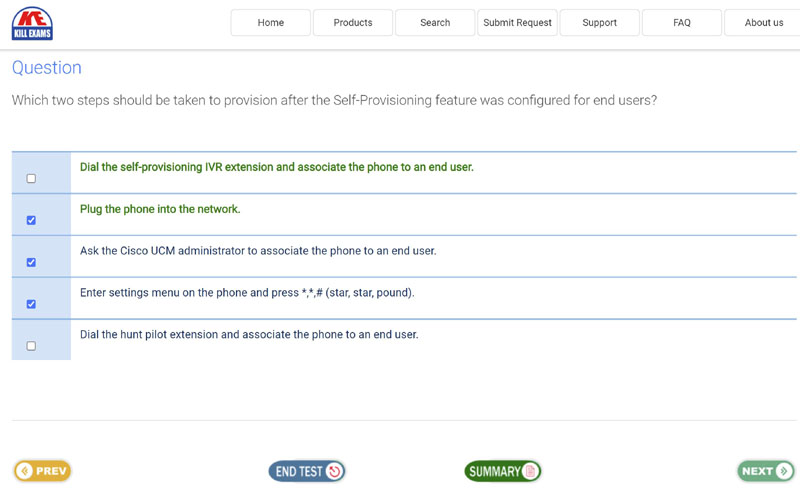
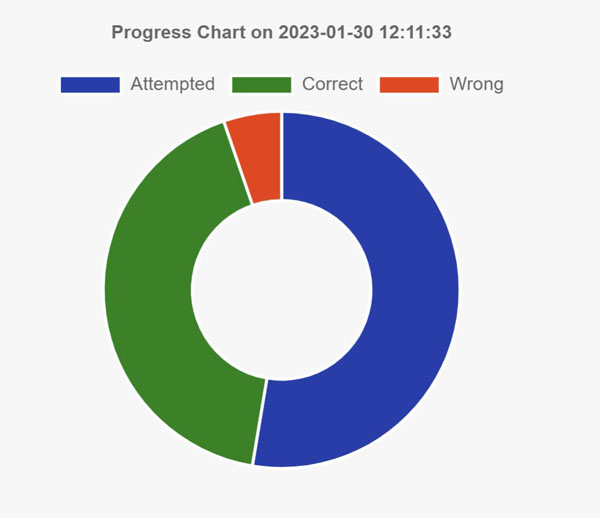
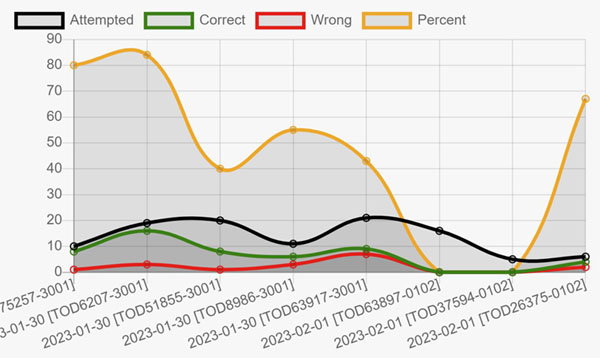
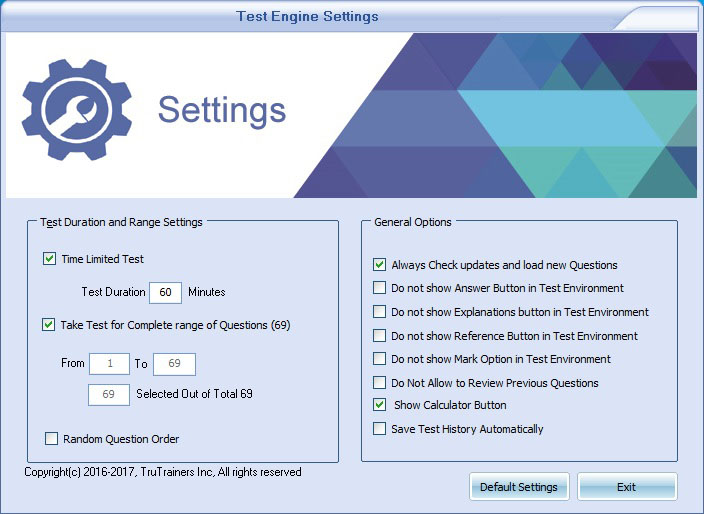
The IREB-CPRE-FL Online Test Engine enables candidates to simulate real exam-style practice sessions, review answers, and track progress over time. This learning approach helps users practice test questions, question formats and Strengthen time management while preparing for the IREB Certified Professional for Requirements Engineering - Foundation Level exam.
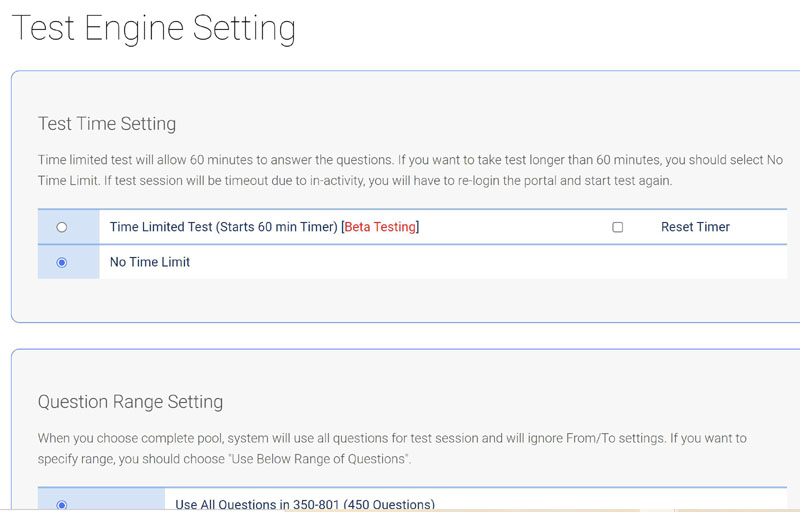
The Test Engine includes features that support effective learning, such as customizable practice sessions, question review modes, and progress tracking. These tools are designed to assist candidates in identifying knowledge gaps and reinforcing key concepts through repeated practice rather than memorization alone.
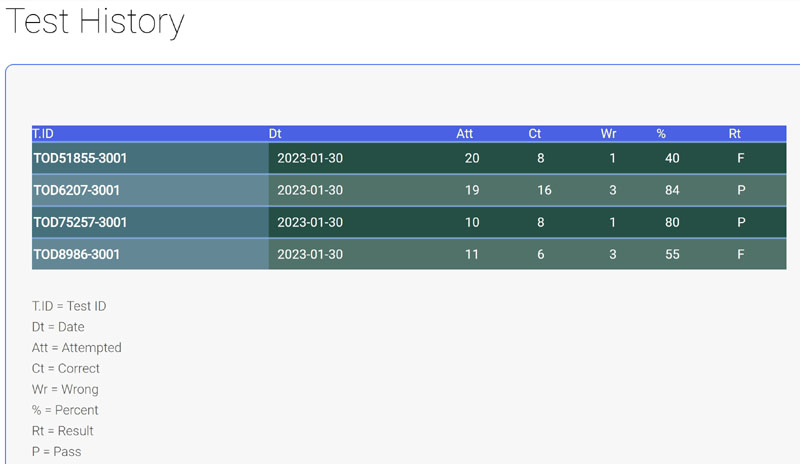
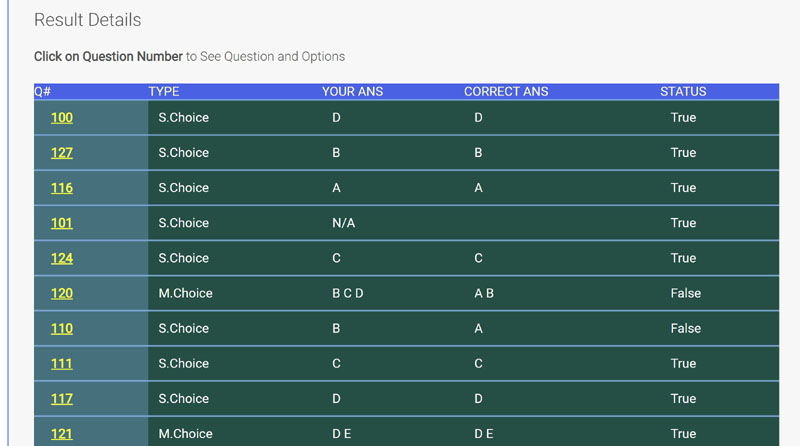
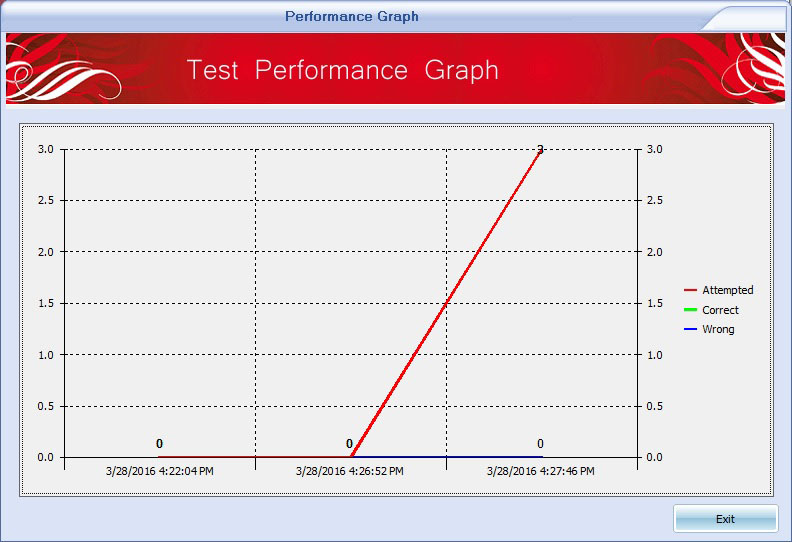
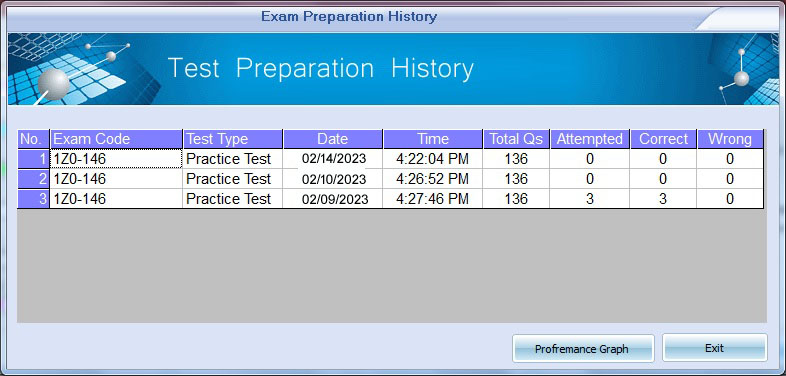
The Online Test Engine maintains practice history, performance summaries, and visual progress reports. Where available, questions may include explanations or reference information to support better understanding of test topics. Content is reviewed and updated periodically to reflect relevant syllabus changes and maintain consistency with test objectives.
Desktop Test Engine
Desktop Test Engine Questions
: 761
Software Version
: 3.0.9
Access
: Unlimited
Latest Update
: March 17, 2026
Access Activation
: Instant (5 to 10 min.)
Support OS
: Windows (All Versions)
Delivery Method
: Username/Password
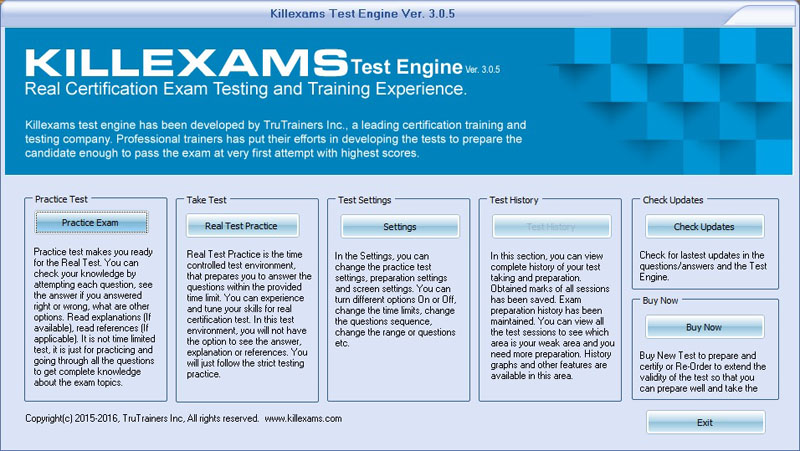
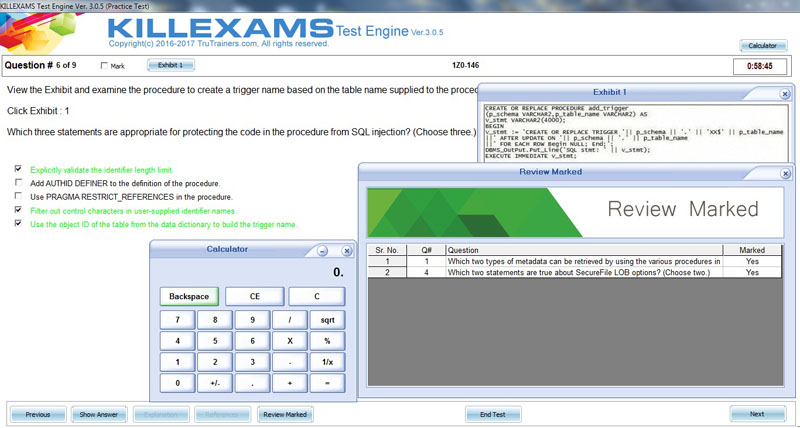
The Killexams Desktop test Simulator (version 3.0.9) is a dedicated test preparation software designed to support candidates preparing for the IREB-CPRE-FL exam. The simulator provides a structured desktop-based practice environment that allows users to work through exam-style questions and review their performance in detail.
By practicing with the IREB Certified Professional for Requirements Engineering - Foundation Level test Simulator, candidates can become familiar with question formats, test navigation, and time-based testing conditions similar to those used in official exams. This experience helps users build confidence across test subjects and identify areas that may require additional study.
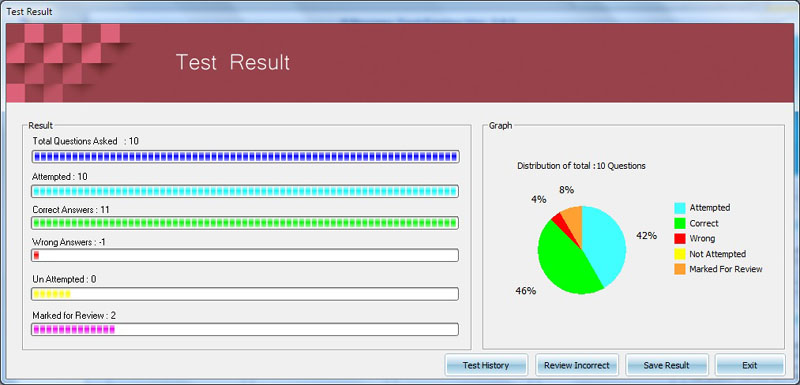
The Desktop test Simulator records practice history, performance summaries, and graphical progress reports. Where available, questions may include explanations or reference information to support understanding of correct and incorrect answers. The simulator content is reviewed and updated periodically to remain aligned with current test objectives and syllabus requirements.
Choosing the right certification practice test and test dumps provider can be challenging due to validity and timely update, as candidates often encounter unreliable and outdated services that compromise their preparation. At Killexams.com, we are committed to delivering top-quality practice questions with actual questions, ensuring our materials are regularly updated and rigorously validated for accuracy. Our customers’ success is a testament to our dedication, with countless candidates passing their certification exams confidently and efficiently thanks to our resources. We take pride in maintaining an impeccable reputation, built on trust, quality, and customer satisfaction. Unlike some providers, we never compromise on the integrity of our review process or the reliability of our practice tests. Be cautious of misleading reports or scam allegations from competitors, which are often designed to undermine trusted services like ours. At Killexams.com, we back our offerings with authentic customer reviews and proven results. Explore our trial practice questions, PDF resources, and advanced VCE test simulator to experience why Killexams.com is the preferred choice for certification preparation. Your success is our priority, and we’re here to help you achieve it with confidence.
Is Killexams.com Legit? Without a doubt, Killexams is 100 % legit and also fully reputable. There are several options that makes killexams.com unique and straight. It provides up to par and 100 % valid test questions formulated with real exams questions and answers. Price is minimal as compared to most of the services on internet. The mock test are up to date on frequent basis together with most accurate testprep. Killexams account build up and products delivery is amazingly fast. Report downloading is actually unlimited and very fast. Assistance is avaiable via Livechat and Email. These are the features that makes killexams.com a robust website that offer practice questions with real exams questions.
Are killexams practice questions Reliable? The simple answer is YES – you can rely on killexams.com for authentic and updated test Questions and Answers. Many so-called test dumps, practice tests, study guides, and braindumps providers in the market are just re-sellers offering outdated or recycled content. Killexams.com stands out as the best test Preparation Website of Year 2026 because we understand the real challenge candidates face when wasting time on obsolete material from free PDF downloads or unreliable sources. That’s why our test dumps collection is updated regularly, in sync with the Real Test updates.
At killexams.com, we provide trusted, accurate, and frequently validated practice test Questions created by Certified Professionals. Our reliable MCQs is maintained daily to ensure you study the latest syllabus subjects and course content. With our updated PDF test Dumps and Practice Tests, you not only pass your test quickly but also Strengthen your knowledge of the latest test syllabus.
To guarantee test success, simply download our PDF test Questions and start practicing. When you upgrade to our Premium Version, registration takes only a few minutes, and your login details will be delivered to your email instantly. Your account will also include free access to all future updates and newly added MCQs. You can re-download the Premium PDF files without any limits.
Killexams.com also offers advanced Test Engine Software that simulates the actual test environment. You can attempt Real test Questions, track your performance, and practice unlimited times until you achieve 100% readiness. Once you start scoring full marks with the complete question pool, you will be fully prepared for the actual certification exam. Register today, schedule your test, and enjoy guaranteed success with killexams.com.