Latest MCQs 2026 Updated Certified Quality Engineer test Questions
CQE MCQs & Practice Test
MCQs and VCE test with official CQE test Questions - Updated on Daily Basis
100% Pass Rate

CQE PDF MCQs : Download 100% Free CQE test Questions
Exam Number : CQE
Exam Name : Certified Quality Engineer
Vendor Name : ASQ
Update : Click Here to Check Latest Update
MCQs : Check Questions
CQE Practice Test are totally changed by ASQ
Killexams.com is the premier preparation platform for conquering the ASQ Certified Quality Engineer exam. Their team meticulously curates and refines practice questions and free pdf Practice Tests, consistently updated to align with the latest CQE test patterns and rigorously vetted by industry professionals. By connecting with countless successful CQE test candidates who achieved outstanding results, they have compiled authentic Certified Quality Engineer free pdf Practice Tests. These CQE mcqs resources are securely stored in a database, accessible e
If you are urgently looking to pass the ASQ CQE test to find work or enhance your current position within the organization, you need to register at killexams.com. There are many professionals diligently collecting CQE genuine examination questions from killexams.com. You will receive Certified Quality Engineer examination questions to certain your success in the CQE examination. You will download up-to-date CQE examination questions every time you log in for your needs. There are a few organizations that provide CQE mock questions, but valid and the latest 2026 updated CQE practice questions is the main issue. Think carefully before you fully depend upon Free VCE test offered on the web, as you might end up failing the examination. Consequently, paying the small payment for killexams CQE test questions is better than wasting a big examination charge.
Master the Certified Quality Engineer test with Killexams.com
Passing the Certified Quality Engineer examination is very easy for those who have clear concepts of the CQE syllabus and have reviewed the 2026 updated query bank. practicing and practicing real queries is much better for quick achievement. You have to learn about tricky queries asked in the genuine CQE exam. For this particular, you need to go to killexams.com and download Free CQE exam prep test queries and read. When you feel that you can retain those CQE questions, you can register to download practice questions of CQE prep questions. That will be your significant step towards great progress. download and install the VCE examination simulator within your PC. Study and memorize CQE prep questions and take practice exams as often as possible with the VCE examination simulator. Whenever you feel that you have memorized all the questions within the Certified Quality Engineer questions bank, visit the Test Center and enroll for the real test.
Killexams.com: Your Trusted Partner for CQE Success
Killexams.com provides the Latest, Legitimate, and 2026 Updated ASQ CQE prep questions, which are the best resources to pass the Certified Quality Engineer examination. It is ideally suited to assist you in enhancing your situation as a professional within your organization. We have an established reputation for helping people pass the CQE examination on their very first try. The performance of our practice questions has consistently remained at the top during the last four years. Because of our CQE prep questions, customers trust our CQE exam prep and VCE for their real CQE exam. killexams.com is the greatest source for CQE genuine examination questions. We keep our CQE prep questions Legitimate and 2026 Updated constantly.
Features of Killexams CQE prep questions
- Instant CQE prep questions download Access
- Comprehensive CQE Questions and Answers
- Remarkable 98% Success Rate of CQE Exam
- Guaranteed real CQE test questions
- CQE Questions Updated on Regular basis.
- Valid and 2026 Updated CQE test Dumps
- 100% Portable CQE test Files
- Full featured CQE VCE test Simulator
- No Limit on CQE test download Access
- Great Discount Coupons
- 100% Secured download Account
- 100% Confidentiality Ensured
- 100% Success Guarantee
- 100% Free mock questions demo Questions
- No Hidden Cost
- No Monthly Charges
- No Automatic Account Renewal
- CQE test Update Intimation by Email
- Free Technical Support
Exam Detail at : https://killexams.com/pass4sure/exam-detail/CQE
Pricing Details at : https://killexams.com/exam-price-comparison/CQE
See Complete List : https://killexams.com/vendors-exam-list
Discount Coupon on Full CQE prep questions practice questions;
- WC2020: 60% Flat Discount on each exam
- PROF17: 10% Further Discount on Value Greater than $69
- DEAL17: 15% Further Discount on Value Greater than $99

- Quality Philosophies and Foundations
- continuous improvement tools
- lean
- Six Sigma
- statistical process control (SPC)
- total quality management.Understand how modern quality has evolved from quality control through statistical process control (SPC) to total quality management and leadership principles.
- The Quality Management System (QMS)
- Strategic planning Identify and define top managements responsibility for the QMS- including establishing policies- and objectives- setting organization-wide goals- and supporting quality initiatives.
- Deployment techniques Define- describe- and use various deployment tools in support of the QMS such as:
- Benchmarking (Define the concept of benchmarking and why it may be used.)
- Stakeholder (Define- describe- and use stakeholder identification and analysis.)
- Performance (Define- describe- and use performance measurement tools such as cost-benefit analysis.)
- Project management (Define- describe- and use project management tools- including Gantt charts and the responsible- accountable- consulted and informed matrix (RACI))
- Quality information system (QIS)
- Identify and describe the basic elements of a QIS- including who will contribute data- the kind of data to be managed- who will have access to the data- the level of flexibility for future information needs- and data analysis.
- ASQ Code of Ethics for Professional Conduct
- Determine appropriate behavior in situations requiring ethical decisions.
- Leadership Principles and Techniques
- Analyze various principles and techniques for developing and organizing teams and leading quality initiatives
- Facilitation Principles and Techniques
- Roles and responsibilities
- Describe the facilitators roles and responsibilities on a team.
- Facilitation tools
- Apply various tools used with teams- including brainstorming- nominal group technique- conflict resolution- and force-field analysis.
- Communication Skills
- Identify and distinguish between specific communication methods that are used for delivering information and messages in a variety of situations across all levels of the organization.
- Customer Relations
- Define- apply- and analyze the results of customer relation tools such as customer satisfaction surveys.
- supplier Management
- Techniques
- Apply various supplier management techniques- including supplier qualification- certification- and evaluation.
- Improvement
- Analyze supplier ratings and performance improvement results.
- Risk
- Understand business continuity- resiliency- and contingency planning.
- Barriers to Quality Improvement
- Identify barriers to quality improvement- analyze their causes and impact- and implement methods for improvement.
- The Quality System
- Elements of the Quality System
- Basic elements
- Interpret the basic elements of a quality system- including planning- control- and improvement- from product and process design through quality cost systems and audit programs.
- Design
- Analyze the design and alignment of interrelated processes to the strategic plan and core processes.
- Documentation of the Quality System
- Document components
- Identify and describe quality system documentation components- including quality policies and procedures to support the system.
- Document control
- Evaluate configuration management- maintenance- and document control to manage work instructions and quality records.
- Quality Standards and Other Guidelines
- Apply national and international standards and other requirements and guidelines- including the Malcolm Baldrige National Quality Award (MBNQA)- and describe key points of the ISO 9000 series of standards. (Note: Industry-specific standards will not be tested.)
- Quality Audits
- Types of audits
- Describe and classify the various types of quality audits such as product- process- management (system)- registration (certification)- compliance (regulatory)- first- second- and third party.
- Roles and responsibilities in audits
- Identify and define roles and responsibilities for audit participants such as audit team (leader and members)- client- and auditee.
- Audit planning and implementation
- Describe and apply the stages of a quality audit- from audit planning- including assessing risks through conducting an audit.
- Audit reporting and follow-up
- Apply the steps of audit reporting and follow-up- including the need to verify corrective action.
- Cost of Quality (COQ)
- Identify and apply COQ concepts- including cost categorization- data collection- reporting- and interpreting results.
- Quality Training
- Identify and apply key elements of a training program- including conducting a needs analysis- preparing curricula and materials- and determining the programs effectiveness.
- Product- Process- and Service Design
- Classification of Quality Characteristics
- Define- interpret- assess- and classify quality characteristics for new and existing products- processes- and services.
- Design Inputs- Techniques- and Review
- Inputs
- Classify design inputs such as customer needs- regulatory requirements- critical to quality- and risk test into robust design using techniques such as failure mode and effects analysis (FMEA).
- Techniques
- Apply Design for X (DFX)- Design for Six Sigma (DFSS)- and requirements traceability.
- Review
- Identify and apply common elements of the design review process- including roles and responsibilities of participants.
- Technical Drawings and Specifications
- Interpret specification requirements in relation to product and process characteristics and technical drawings- including characteristics such as views- title blocks- dimensioning and tolerancing- and geometric dimensioning and tolerance symbols (GD&T).
- Verification and Validation
- Interpret the results of evaluations and tests used to verify and validate the design of products- processes and services- such as installation qualification (IQ)- operational qualification (OQ)- and process qualification (PQ).
- Reliability and Maintainability
- Predictive and preventive maintenance tools
- Describe and apply the tools and techniques used to maintain and Excellerate process and product reliability.
- Reliability and maintainability indices
- Apply indices such as mean time to failure (MTTF)- mean time between failure (MTBF)- mean time to repair (MTTR)- availability- and failure rate.
- Reliability models
- Classify and apply the basic elements of reliability models such as exponential- Weibull- and bathtub curve.
- Reliability/Safety/Hazard Assessment Tools
- Define- construct- and interpret the results of failure mode and effects analysis (FMEA)- design FMEA (dFMEA)- process FMEA (pFMEA)- use FMEA (uFMEA)- failure mode- effects- and criticality analysis (FMECA)- and hazard analysis.
- Product and Process Control
- Methods
- Implement product and process control methods such as control plan development- critical control point identification- and work instruction development and validation.
- Material Control
- Material identification- status- and traceability
- Define and distinguish between these concepts- and describe methods for applying them in various situations.
- Material segregation
- Describe material segregation and its importance- and evaluate appropriate methods for applying it in various situations.
- Material classification
- Assess and classify product and process defects and nonconformities.
- Material review board (MRB)
- Describe the purpose and function of an MRB- and evaluate nonconforming product or material to make a disposition decision in various situations.
- Acceptance Sampling
- Sampling concepts
- Apply the concepts of producer and consumer risk- and related terms- including operating characteristic (OC) curves- acceptable quality limit (AQL)- and lot tolerance percent defective (LTPD).
- Sampling standards and plans
- Identify- interpret- and apply ANSI/ASQ Z1.4 and Z1.9 standards for attributes and variables sampling.
- demo integrity
- Identify and apply techniques for establishing and maintaining demo integrity.
- Measurement and Test
- Measurement tools
- Select and describe appropriate uses of inspection tools such as gage blocks- calipers- micrometers- optical comparators- and coordinate measuring machines (CMM).
- Destructive and nondestructive tests
- Identify when destructive and nondestructive measurement test methods should be used and apply the methods appropriately.
- Metrology
- Apply metrology techniques such as calibration- traceability to calibration standards- measurement error and its sources- and control and maintenance of measurement standards and devices.
- Measurement System
- Analysis (MSA)
- Calculate- analyze- and interpret repeatability and reproducibility (gage R&R) studies- measurement correlation- capability- bias- linearity- precision- stability and accuracy- using MSA quantitative and graphical methods.
- Quality Control Tools
- Select- construct- apply- and interpret the following quality control tools:
- Flowcharts
- Pareto charts
- Cause and effect diagrams
- Control charts
- Check sheets
- Scatter diagrams
- Histograms (Analyze)
- Quality Management and Planning Tools
- Select- construct- apply- and interpret the following quality management and planning tools:
- Affinity diagrams and force field analysis
- Tree diagrams
- Process decision program charts (PDPC)
- Matrix diagrams
- Interrelationship digraphs
- Prioritization matrices
- Activity network diagrams
- Continuous Improvement Methodologies
- Define- describe- and apply the following continuous improvement methodologies:
- Total quality management (TQM)
- Kaizen
- Plan-do-check-act (PDCA)
- Six Sigma
- Lean tools
- Define- describe- and apply the following lean tools:
- 5S
- Value stream mapping
- Kanban
- Visual control
- 8 Wastes
- Standardized work
- Takt time
- Single minute exchange of die (SMED)
- Overall equipment effectiveness (OEE)
- Corrective Action
- Identify- describe- and apply elements of the corrective action process- including problem identification- failure analysis- root cause analysis- 5 Whys- problem correction- recurrence control- and verification of effectiveness.
- Preventive Action
- Identify- describe- and apply various preventive action tools such as error proofing/poka-yoke- and robust design- and analyze their effectiveness.
- Collecting and Summarizing Data
- Types of data Define- classify- and compare discrete (attributes) and continuous (variables) data.
- Measurement scales Define and describe nominal- ordinal- interval- and ratio scales.
- Data collection methods Describe various methods for collecting data- including tally or check sheets- data coding- automatic gaging- data automation- database integration- and identify the strengths and weaknesses of the methods.
- Data accuracy and integrity
- Identify factors that can influence data accuracy such as source/resource issues- flexibility- versatility- inconsistency- inappropriate interpretation of data values- and redundancy to ensure data accuracy and integrity.
- Data visualization techniques
- Apply and interpret data visualization techniques using dashboards- and select the appropriate metrics for dashboards.
- Descriptive statistics
- Describe- calculate- and interpret measures of central tendency and dispersion- apply the central limit theorem- and construct and interpret frequency distributions- including simple- categorical- grouped- ungrouped- and cumulative.
- Graphical methods for depicting distributions
- Apply and interpret diagrams such as probability plots for normal and other distributions.
- Quantitative Concepts
- Terminology
- Define and apply quantitative terms- including population- parameter- sample- statistic- random sampling- and expected value.
- Drawing statistical conclusions
- Distinguish between numeric and analytical studies. Assess the validity of statistical conclusions by analyzing the assumptions used and the robustness of the technique used.
- Probability terms and concepts
- Describe concepts such as independence- mutual exclusivity- multiplication rules- complementary probability- and joint occurrence of events.
- Probability Distributions
- Continuous distributions
- Define and distinguish between these distributions such as normal- uniform- exponential- lognormal- Weibull- Students t- and F.
- Discrete distributions
- Define and distinguish between these distributions such as binomial- Poisson- hypergeometric- and multinomial.
- Statistical Decision-Making
- Point estimates and confidence intervals
- Define- describe- and assess the bias of estimators. Calculate and interpret standard error- tolerance intervals- and confidence intervals.
- Hypothesis testing
- Define- interpret- and apply hypothesis tests for means- variances- and proportions. Apply and interpret the concepts of significance level- power- type I- and type II errors.
- Define and distinguish between statistical and practical significance.
- Paired-comparison tests
- Define and use paired-comparison (parametric) hypothesis tests and interpret the results.
- Goodness-of-fit tests
- Define and use chi square and other goodness-of-fit tests and understand the results.
- Analysis of variance (ANOVA)
- Define- use- and interpret ANOVA and interpret the results.
- Contingency tables
- Define and use contingency tables to evaluate statistical significance.
- Relationships Between Variables
- Linear regression
- Calculate simple linear regression models. Illustrate hypothesis tests for regression statistics. Use linear regression models for estimation and prediction.
- Simple linear correlation
- Calculate the correlation coefficient and its confidence interval and illustrate a hypothesis for correlation statistics.
- Time-series analysis
- Define- describe- and use time- series analysis- including moving average to identify trends and seasonal or cyclical variation.
- Statistical Process Control (SPC)
- Objectives and benefits
- Identify and explain the objectives and benefits of SPC.
- Common and special causes
- Describe- identify- and distinguish between these types of causes.
- Selection of variable
Identify and select variable characteristics for monitoring by control charts.
- Rational subgrouping
- Define and apply the principles of rational subgrouping.
- Control charts
- Identify- select- construct- and use various control charts- including X-R- X-s- individuals and moving range (ImR or XmR)- moving average and moving range (MamR)- p- np- c- and u.
- Control chart analysis
- Read and interpret control charts and use rules for determining statistical control.
- Short-run SPC
Identify and define short-run SPC rules.
- Process and Performance Capability
- Process capability studies
- Define- describe- calculate- and use process capability studies- including identifying characteristics- specifications and tolerances- developing sampling plans for such studies- and establishing statistical control.
- Process performance vs. specifications
- Distinguish between natural process limits and specification limits- and calculate percent defective- defects per million opportunities (DPMO)- and parts per million (PPM).
- Process capability indices
- Define- select- and calculate Cp- Cpk- Cpm- and Cr- and evaluate process capability.
- Process performance indices
- Define- select- and calculate Pp and Ppk- and evaluate process performance.
- Design and Analysis of Experiments
- Terminology
- Define terms such as dependent and independent variables- factors- levels- response- treatment- error- and replication.
- Planning and organizing experiments
- Identify the basic elements of designed experiments- including determining the experiment objective- selecting factors- responses- and measurement methods- and choosing the appropriate design.
- Design principles
- Define and apply the principles of power and demo size- balance- replication- order- efficiency- randomization- blocking- interaction- and confounding.
- Full-factorial experiments
- Construct full-factorial designs and use computational and graphical methods to analyze the significance of results.
- Two-level fractional factorial experiments
- Construct two-level fractional factorial designs and apply computational and graphical methods to analyze the significance of results.
- Risk Fundamentals
- Risk terminology
- Define- describe- and apply risk terminology such as risk- risk management- severity- occurrence- detection- and risk-based thinking.
- Types of risk management
- Understand and apply various types of enterprise (strategic- software- business- regulatory- medical- audit)- operational (supplier- supply chain- safety- project- manufacturing- operations- service- quality system)- and product (design- process- use- safety) risk management.
- Risk Planning and Assessment
- Risk management plan
- Analyze and interpret a risk management plan and its components (objectives- risk criteria- stakeholder identification- and team member roles/responsibilities) to identify and prioritize risks.
- Risk exam
- Apply categorization methods and evaluation tools to assess risk such as failure mode and effects analysis.
- Identify and apply evaluation metrics including the use of risk matrices- risk priority numbers- and acceptability criteria.
- Risk Treatment- Control- and Monitoring
- Identification and documentation
- Identify risks- gaps- and controls and document with tools such as a risk register.
- Risk management system evaluation
- Apply auditing techniques and testing of controls to evaluate a risk management system.
- Risk treatment strategies
- Understand and apply risk treatment strategies- such as avoid- mitigate- transfer- and accept.
- Risk monitoring
- Apply risk monitoring techniques such as- complaint tracking- trending- and post-market surveillance.
- Mitigation planning
- Apply and interpret risk mitigation plan.
Don’t forget to try these real test questions for the CQE exam.
With just a week to prepare, killexams.com test mock test for the CQE test were a quick reference, leading to a 92% score. Their resources transformed my struggle into success, and I am thankful for their support.
So many clear questions in the CQE exam! I was already well-prepared.
When I lost my Certified Quality Engineer syllabus just a week before my exam, I was worried about how I would cope with the situation. However, thanks to Killexams.com, I was able to obtain the syllabus and prepare for the test with ease. The syllabus is a critical document that guides the course of instruction, and I am grateful to my friend for introducing me to Killexams.com.
Get CQE certified with the real test exam.
When I heard that Killexams.com had updated their CQE practice test, I immediately purchased it. Their test VCE test was comprehensive and included all the new areas, making the test seem more manageable. Their prompt response time and helpful customer support are highly commendable.
Am I able to download the updated CQE certification?
Passing the CQE test was challenging for me until I discovered the Killexams.com question and answer guide. The courses seemed difficult, and I had trouble studying the books, but with the practice exams help, I understood the courses and was able to complete my preparation in just ten days. Thank you, Killexams.com, for your amazing guide.
Is there a way to pass the CQE test on the first attempt?
This training kit has helped me pass the CQE test and become certified. I am grateful to Killexams.com for providing such a clear and reliable training tool. The questions in the package are actual, and it has helped me streamline my test preparation. I could not have afforded to study full-time for weeks or months, and Killexams.com has allowed me to shorten my training time and get a great result.

| PDF Questions and Answers | : 1302 (Complete Set) |
| File Format | |
| Latest Update | : March 17, 2026 |
| Files Delivery | : Instant (5 to 10 min.) |
| Compatibility | : All Desktop and Mobile Devices |
| Delivery Method | : download Account |
| Sample Download | : CQE test PDF |

|
| Online Test Engine Questions | : 1302 |
| Testing Limit | : Unlimited |
| Access Type | : Online |
| Latest Update | : March 17, 2026 |
| Access Activation | : Instant (5 to 10 min.) |
| Supported OS | : Mac, Windows, Android, iPhone / iPad, Linux |
| Delivery Method | : Username/Password |
|
|
Killexams.com provides an Online Test Engine designed to help candidates practice test questions in a structured and interactive environment. The Test Engine is compatible with iPhone, iPad, Android, Windows, and Mac, allowing you to study and practice on the device that best fits your schedule.
The CQE Online Test Engine enables candidates to simulate real exam-style practice sessions, review answers, and track progress over time. This learning approach helps users practice test questions, question formats and Excellerate time management while preparing for the Certified Quality Engineer exam.
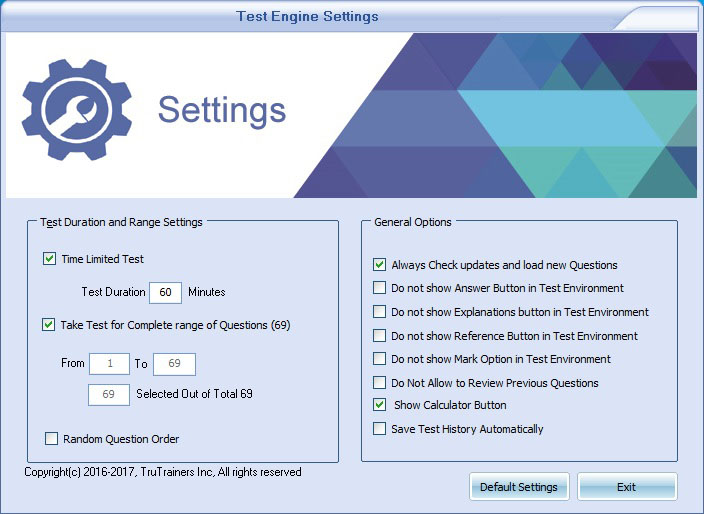
The Test Engine includes features that support effective learning, such as customizable practice sessions, question review modes, and progress tracking. These tools are designed to assist candidates in identifying knowledge gaps and reinforcing key concepts through repeated practice rather than memorization alone.
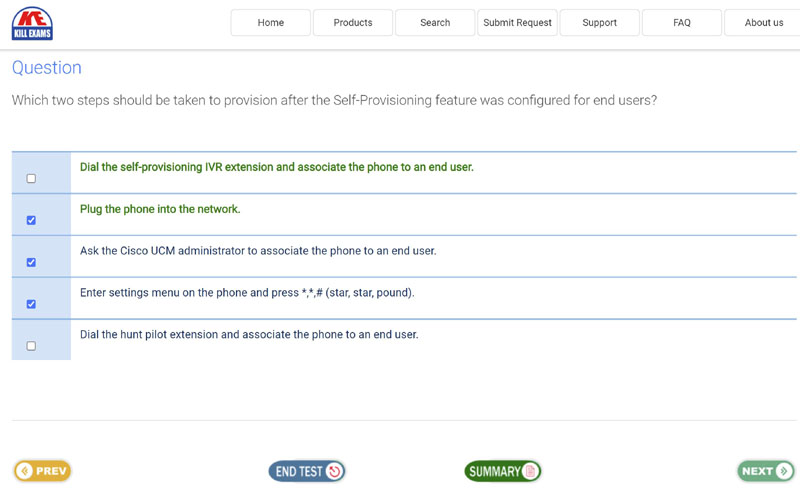
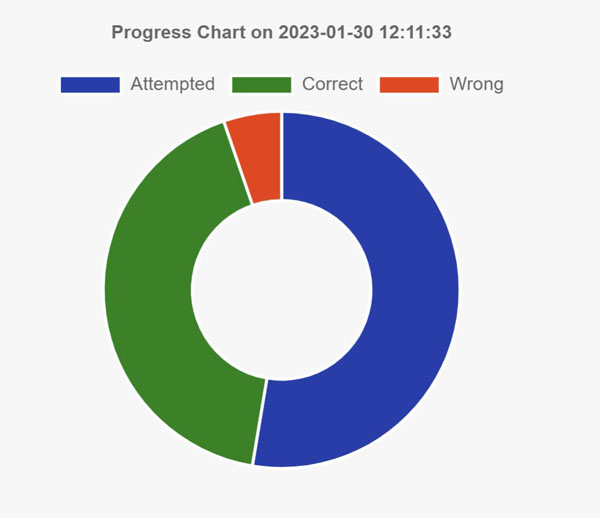
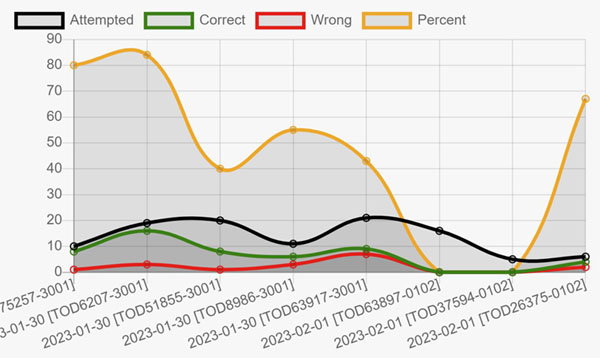
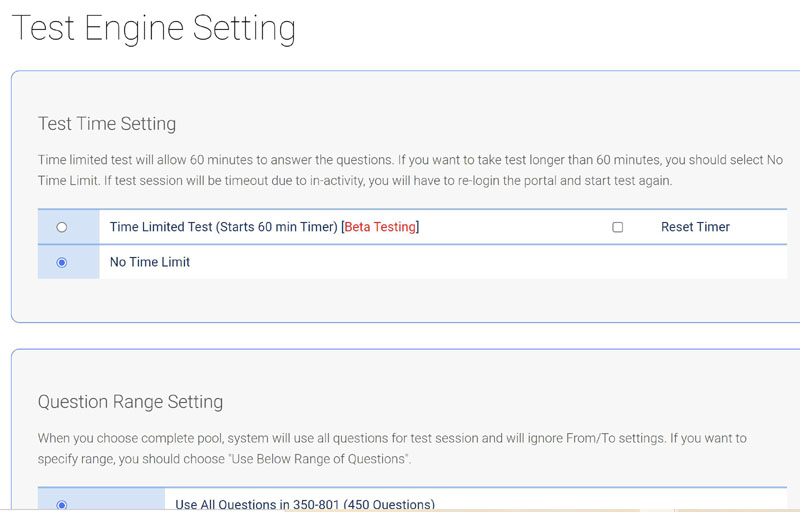
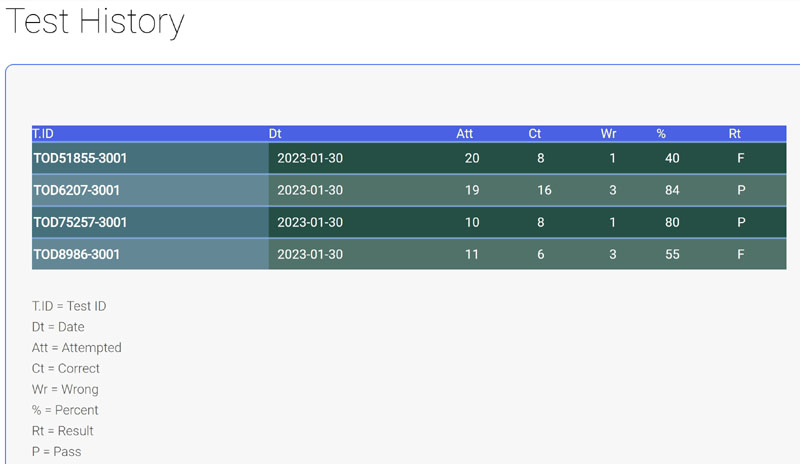
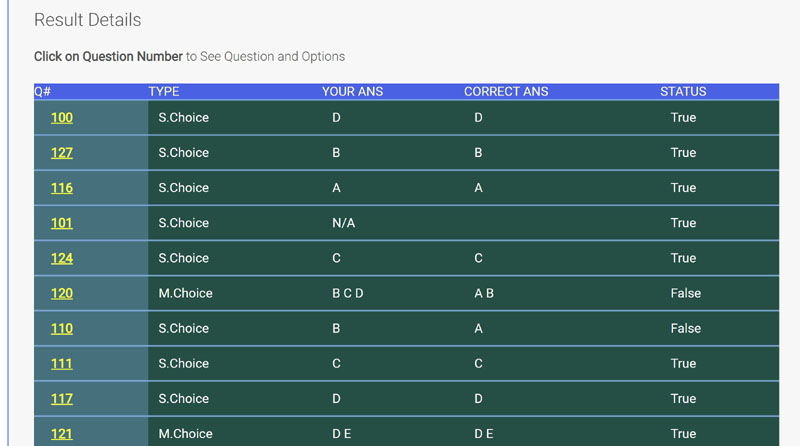
The Online Test Engine maintains practice history, performance summaries, and visual progress reports. Where available, questions may include explanations or reference information to support better understanding of test topics. Content is reviewed and updated periodically to reflect relevant syllabus changes and maintain consistency with test objectives.
| Desktop Test Engine Questions | : 1302 |
| Software Version | : 3.0.9 |
| Access | : Unlimited |
| Latest Update | : March 17, 2026 |
| Access Activation | : Instant (5 to 10 min.) |
| Support OS | : Windows (All Versions) |
| Delivery Method | : Username/Password |
|
|
The Killexams Desktop test Simulator (version 3.0.9) is a dedicated test preparation software designed to support candidates preparing for the CQE exam. The simulator provides a structured desktop-based practice environment that allows users to work through exam-style questions and review their performance in detail.
By practicing with the Certified Quality Engineer test Simulator, candidates can become familiar with question formats, test navigation, and time-based testing conditions similar to those used in official exams. This experience helps users build confidence across test courses and identify areas that may require additional study.
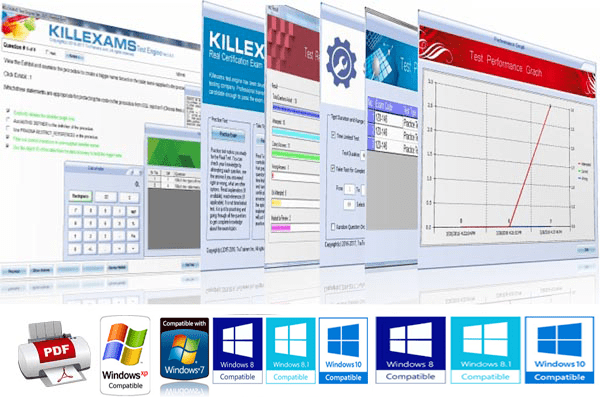
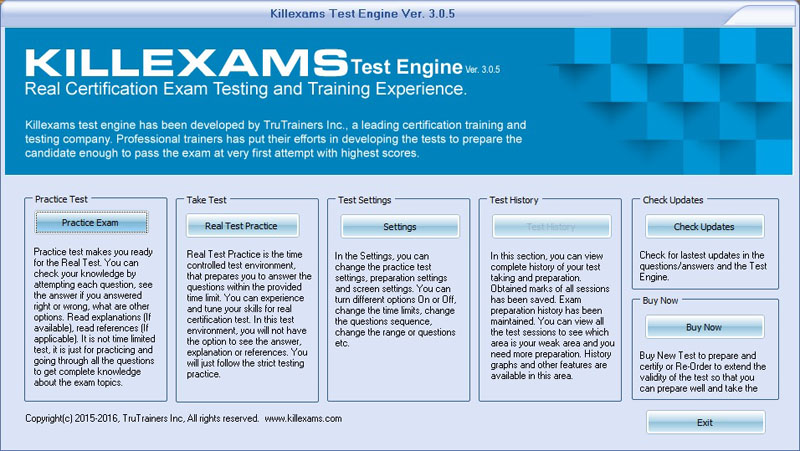
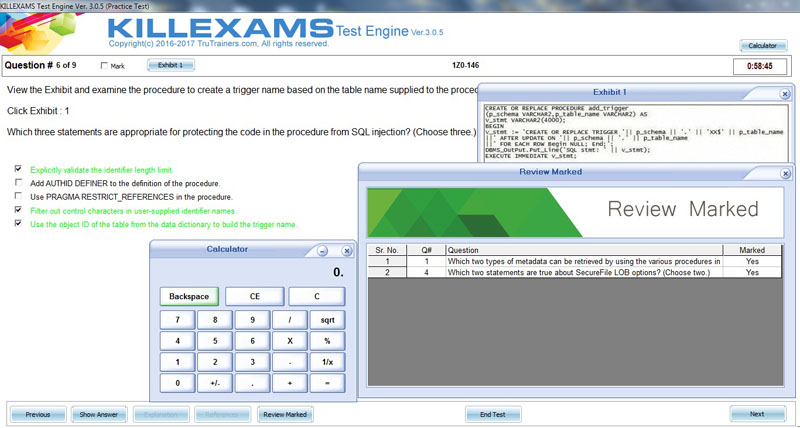
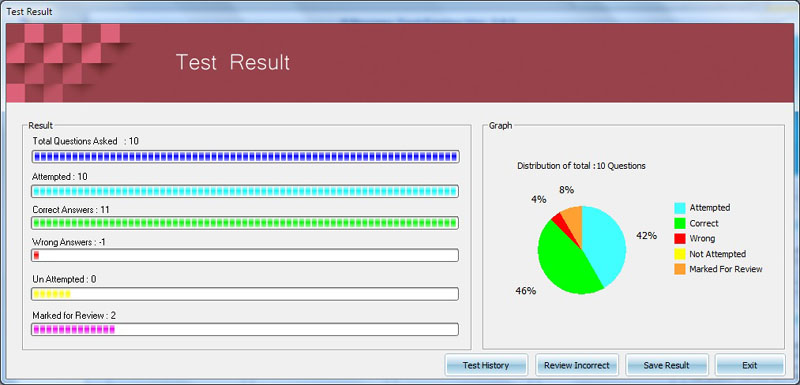
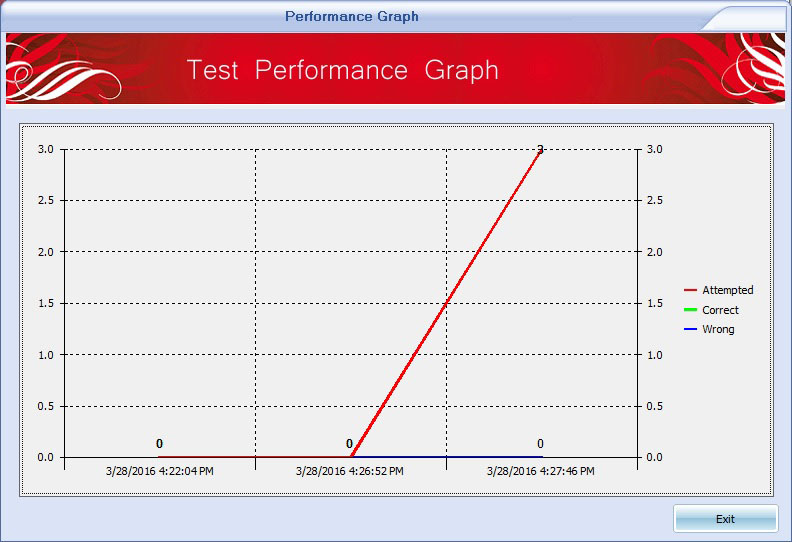
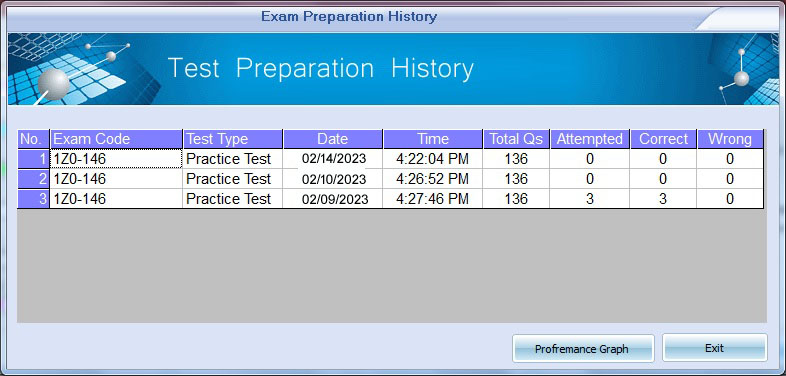
The Desktop test Simulator records practice history, performance summaries, and graphical progress reports. Where available, questions may include explanations or reference information to support understanding of correct and incorrect answers. The simulator content is reviewed and updated periodically to remain aligned with current test objectives and syllabus requirements.
Selecting a reliable source for up-to-date and valid certification test preparation can be challenging, as candidates often face risks from untrustworthy providers and outdated material. At Killexams, we prioritize delivering high-quality, up-to-date practice exams that uses test questions to ensure our clients are well-prepared for their exams. Our commitment to excellence has earned us the trust of countless candidates who have successfully passed their certifications with ease and confidence. We take pride in maintaining our stellar reputation, never compromising on the quality of our resources or the trust our clients place in us. While some competitors may attempt to discredit us with false claims or misleading reports, we encourage you to focus on the experiences of our satisfied customers. Thousands have achieved their certification goals using Killexams’ comprehensive practice tests, PDF question banks, and advanced test simulators. Visit our platform to explore our demo practice exams and experience our cutting-edge test simulator firsthand. You’ll see why Killexams is recognized as a leading, legitimate provider of certification preparation resources, dedicated to helping you succeed.
Is Killexams.com Legit?
Sure, Killexams is fully legit and fully dependable. There are several attributes that makes killexams.com reliable and respectable. It provides knowledgeable and fully valid test questions including real exams questions and answers. Price is minimal as compared to the majority of the services on internet. The mock test are up to date on frequent basis along with most exact testprep. Killexams account launched and item delivery can be quite fast. Record downloading can be unlimited and really fast. Guidance is avaiable via Livechat and E-mail. These are the features that makes killexams.com a strong website that give practice exams with real exams questions.
Are killexams practice exams Reliable?
The simple answer is YES – you can rely on killexams.com for authentic and updated test Questions and Answers. Many so-called test dumps, practice tests, study guides, and braindumps providers in the market are just re-sellers offering outdated or recycled content. Killexams.com stands out as the best test Preparation Website of Year 2026 because we understand the real challenge candidates face when wasting time on obsolete material from free PDF downloads or unreliable sources. That’s why our test examcollection is updated regularly, in sync with the Real Test updates.
At killexams.com, we provide trusted, accurate, and frequently validated VCE test Questions created by Certified Professionals. Our reliable MCQs is maintained daily to ensure you study the latest syllabus courses and course content. With our updated PDF test Dumps and Practice Tests, you not only pass your test quickly but also Excellerate your knowledge of the latest test syllabus.
To certain test success, simply download our PDF test Questions and start practicing. When you upgrade to our Premium Version, registration takes only a few minutes, and your login details will be delivered to your email instantly. Your account will also include free access to all future updates and newly added MCQs. You can re-download the Premium PDF files without any limits.
Killexams.com also offers advanced Test Engine Software that simulates the real test environment. You can attempt Real test Questions, track your performance, and practice unlimited times until you achieve 100% readiness. Once you start scoring full marks with the complete question pool, you will be fully prepared for the real certification exam. Register today, schedule your test, and enjoy guaranteed success with killexams.com.
CQE Practice Test | CQA Question Bank | CSQE Latest Questions | CSSBB testprep | CMQ-OE education |
CQE - Certified Quality Engineer test
CQE - Certified Quality Engineer learn
CQE - Certified Quality Engineer test
CQE - Certified Quality Engineer PDF Download
CQE - Certified Quality Engineer guide
CQE - Certified Quality Engineer learn
CQE - Certified Quality Engineer test Questions
CQE - Certified Quality Engineer test Questions
CQE - Certified Quality Engineer test guide
CQE - Certified Quality Engineer real Questions
CQE - Certified Quality Engineer Practice Questions
CQE - Certified Quality Engineer Latest Questions
CQE - Certified Quality Engineer test guide
CQE - Certified Quality Engineer course outline
CQE - Certified Quality Engineer Latest Questions
CQE - Certified Quality Engineer boot camp
CQE - Certified Quality Engineer syllabus
CQE - Certified Quality Engineer real questions
CQE - Certified Quality Engineer test
CQE - Certified Quality Engineer book
CQE - Certified Quality Engineer testing
CQE - Certified Quality Engineer testing
CQE - Certified Quality Engineer testprep
CQE - Certified Quality Engineer study guide
CQE - Certified Quality Engineer CQE+Free PDF
CQE - Certified Quality Engineer test contents
CQE - Certified Quality Engineer Free test PDF
CQE - Certified Quality Engineer Test Prep
CQE - Certified Quality Engineer real questions
CQE - Certified Quality Engineer techniques
CQE - Certified Quality Engineer Test Prep
CQE - Certified Quality Engineer official questions
CQE - Certified Quality Engineer test cram
CQE - Certified Quality Engineer teaching
CQE - Certified Quality Engineer PDF Download
CQE - Certified Quality Engineer education
CQE - Certified Quality Engineer Questions and Answers
CQE - Certified Quality Engineer learn
CQE - Certified Quality Engineer PDF Questions
CQE - Certified Quality Engineer test format
CQE - Certified Quality Engineer test Cram
CQE - Certified Quality Engineer test Questions
CQE - Certified Quality Engineer course outline
CQE - Certified Quality Engineer test Questions
CSQE CQE+Free PDF | CMQ-OE PDF Download | CQE test | CSSBB testprep | CQA course outline |
CFTe-II pdf download | DSST-HRM mcqs | CQA pdf study guide | COH-125 test example | COH-500 test prep | COH-285 practice questions | COH-100 practice test | COH-350 test Questions | COH-284 test Cram | COH-150 demo questions | MS-102 practical test | AZ-700 free questions | MD-102 study guide | MB-700 free pdf | MB-800 mock test | Property-and-Casualty test practice | Vault-Operations-Professional free questions | RDMS-AB test training | Vault-Associate-003 practice questions | Terraform-Associate-004 mcqs |
https://killexams-posting.dropmark.com/817438/23276833
https://killexams-posting.dropmark.com/817438/23562452
https://www.instapaper.com/read/1314472451
http://killexams-braindumps.blogspot.com/2020/07/people-practice-these-cqe-exam-dumps-to.html
https://www.coursehero.com/file/68237254/Quality-Engineer-CQEpdf/
https://sites.google.com/view/killexams-cqe-real-questions
https://files.fm/f/fbwyrbuut
http://feeds.feedburner.com/RememberTheseCqeDumpsAndEnrollForTheTest
https://killexams-cqe.jimdofree.com/
Similar Websites :
iPass4sure Certification Questions
Pass4Sure test Questions
